• 0455 851 072
  • admin@carpetsandpests.com.au
Clean Carpets Perth Clean Carpets Perth
  • Home
  • Pest Control
    • Pest Control Perth
    • Commercial Pest Control
    • White Ants/ Termites
    • Pet/Flea Treatment
    • Bee Relocation
    • Millipedes
    • Cockroaches
    • Ant Control Perth
    • Rats & Mice Control Perth
  • Pest Guide
  • Cleaning Services
    • Carpet Cleaning
    • Tile and Grout Cleaning
    • Mattress Sanitization
    • Rug Cleaning
    • Upholstery Cleaning
  • Specialized Cleaning Services
    • Pet Treatment
    • Advanced Stain Removal
    • Odour Removal
    • Mould Treatment
    • Flood Restoration
    • Urine Treatment
  • About
    • T's & C's
  • Get a Quote
  • Our Blog
What’s Eating Your Carpet? The Hidden Signs of Carpet Beetles in Perth Homes

You notice a strange worn patch along the edge of the carpet. Perhaps there are tiny insects near a window, or small hairy larvae hiding beneath furniture. At first, it may look like ordinary wear and tear.

But the problem could be hiding somewhere you rarely look.

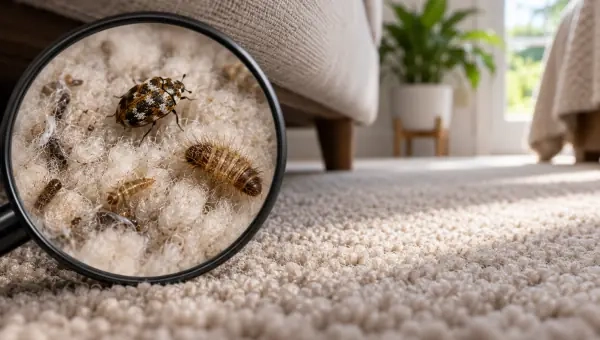
Carpet beetles are a common household pest found throughout Australia, and while the adult beetles themselves may seem harmless, their larvae can cause damage to carpets, clothing, furniture and other materials around the home.

Because carpet beetle larvae prefer dark, quiet and undisturbed areas, an infestation can develop unnoticed beneath furniture, along skirting boards and around the edges of carpets.

So, how do you know if carpet beetles have moved into your home?

What Are Carpet Beetles?

Carpet beetles are small beetles belonging to the Dermestidae family.

One of the biggest misconceptions about carpet beetles is that the adult beetles are responsible for damaging your carpet.

In reality, the larvae are the destructive stage.

Adult carpet beetles generally feed on pollen and nectar outdoors. Once eggs are laid and hatch, however, the larvae search for suitable organic material to feed on. Inside homes, this can include carpets, furniture, clothing, blankets and other fabrics.

The larvae also prefer to stay away from light, which is one of the reasons they can be so difficult for homeowners to spot.

While the carpet in the middle of your lounge may look perfectly fine, activity could be developing somewhere much less obvious.

Where Do Carpet Beetles Hide?

Carpet beetles don't necessarily establish themselves in areas that are easy to see.

They are commonly discovered in places such as:

  • Along the edges of carpet
  • Around skirting boards
  • Beneath beds, couches and other furniture
  • Inside wardrobes
  • In quiet carpeted bedrooms
  • In areas that are rarely disturbed or vacuumed

The Australian Museum notes that eggs laid indoors may be found in lint accumulations, beneath heavy furniture, behind skirting boards and close to suitable food sources. Larvae then tend to remain in dark, undisturbed areas while they develop.

This hidden behaviour is also why professional carpet beetle treatment often focuses heavily on carpet edges, perimeter areas, skirting boards and areas beneath furniture rather than simply spraying the visible surface of the carpet.

Signs of Carpet Beetles in Your Home

Carpet beetle activity isn't always immediately obvious, but there are several warning signs worth investigating.

1. Small Beetles Near Windows

Finding small adult beetles around windows or window sills can sometimes indicate carpet beetle activity elsewhere in the property.

Adult carpet beetles are attracted to light and may make their way towards windows after developing indoors. The Australian Museum specifically notes that finding beetles on window sills may be an indication of an infestation.

The important question isn't only "How did this beetle get here?"

It's also:

"Where did it come from?"

2. Small Hairy Larvae

Carpet beetle larvae look very different from adult beetles.

They are small, hairy grubs that may be found crawling around carpet edges, beneath furniture or in other protected areas.

If you find larvae, it is worth investigating rather than simply removing the one you can see. The visible larva may only be a small part of the activity occurring elsewhere in the room.

3. Damage Around Carpet Edges

One of the areas that deserves particular attention is the perimeter of a carpeted room.

Furniture often covers these areas for months or even years, creating a quiet environment where carpet beetle larvae can remain relatively undisturbed.

This is why moving a bed, couch or cabinet can sometimes reveal a problem that wasn't visible beforehand.

Our carpet beetle treatments specifically focus on affected carpeted areas, carpet edges, perimeter areas, skirting boards and locations where activity has been identified.

4. Activity Beneath Furniture

When was the last time you moved your bed, couch or heavy cabinet and inspected the carpet underneath?

For most people, the answer is probably "not recently."

Unfortunately, those undisturbed areas can provide exactly the type of environment carpet beetle larvae prefer.

If you've discovered carpet beetles in one part of a room, checking beneath nearby furniture and along the perimeter of the carpet can help establish whether the activity is more widespread.

5. Beetles or Larvae Appearing in Multiple Rooms

Finding repeated carpet beetle activity in several carpeted areas may indicate that the issue is no longer isolated.

Our technicians commonly ask customers where carpet beetles have been seen — whether that's in bedrooms, around skirting boards, beneath furniture, inside wardrobes or across several carpeted rooms — because the location and extent of the activity helps determine how the treatment should be approached.

Why Can Carpet Beetles Be Difficult to Treat?

The challenge with carpet beetles is often where they're living.

A quick surface treatment may reach exposed insects, but it may not adequately reach activity occurring around or beneath carpet edges.

In some cases, sections of carpet may need to be accessed so the areas underneath or along the edges can be properly treated.

That is also why access is so important.

Furniture in affected carpeted rooms should be moved wherever possible so technicians can reach the perimeter of the carpet and other areas where beetles may be harbouring.

Treating what you can see while ignoring where the pest is actually living can allow the problem to continue.

Can Vacuuming Help?

Yes — and regular vacuuming is an important part of reducing the conditions carpet beetles favour.

However, don't concentrate only on the open areas of your carpet.

Pay particular attention to:

  • Carpet edges
  • Beneath furniture
  • Around skirting boards
  • Wardrobes and cupboards
  • Areas where lint, hair or debris accumulate
  • Rooms or sections of carpet that are rarely disturbed

The Australian Museum recommends thorough and frequent vacuuming, with particular attention paid to carpet edges and areas covered by furniture.

Vacuuming can be an important preventative measure, but an established infestation may require targeted professional treatment.

What Happens During Professional Carpet Beetle Treatment?

A professional carpet beetle treatment isn't simply about spraying the centre of a room.

At Clean Carpets & Pest Control Perth, treatment is targeted towards the affected areas and may include carpet edges, perimeter areas, skirting boards and locations where carpet beetle activity has been identified. Depending on the situation, technicians may also need access beneath carpet edges.

Before treatment, customers should move furniture away from affected carpeted areas wherever possible. This provides better access to the edges and perimeter of the carpet, where treatment may be particularly important.

For our carpet beetle treatment, occupants and movable pets are also required to vacate the property for five hours following the treatment.

Don't Ignore the Areas You Can't See

A carpet can look clean on the surface while pest activity is taking place around its edges, beneath furniture or in other areas that rarely see daylight.

That's what makes carpet beetles particularly frustrating.

If you're repeatedly finding small beetles, hairy larvae or unexplained carpet and fabric damage, don't assume that removing the insects you can see has solved the problem.

The most important areas may be the ones you can't see.

Carpet Beetle Treatment in Perth

If you suspect carpet beetles are active in your home, Clean Carpets & Pest Control Perth can assess the affected areas and provide a targeted carpet beetle treatment.

Our treatments focus on the areas where carpet beetles commonly hide, helping significantly reduce activity throughout affected carpeted areas.

If you've noticed carpet beetles, larvae or suspicious activity around your carpets, get in touch with our team to discuss the situation and arrange a treatment.

Clean Carpets & Pest Control Perth
Professional carpet cleaning and pest control services throughout the greater Perth area.


References:

Australian Museum – Australian Carpet Beetles

Western Australian Museum – Carpet Beetle (Anthrenus sp.)

University of California Statewide Integrated Pest Management Program – Carpet Beetles

Department of Primary Industries and Regional Development, Western Australia – Carpet Beetles and Their Control

Article Author: Janus Oosthuizen

Original publication date: 9 September 2026
Why End of Lease Flea Treatment is Required

If you've kept a pet at a rental property in Western Australia, your tenancy agreement may require a professional flea treatment when you move out.

Even when you've never noticed fleas on your pet or around the property, an end-of-lease flea treatment may form part of your agreed tenancy obligations.

Understanding your lease requirements before vacating can help make the end-of-lease process smoother and avoid last-minute surprises.

Why Is an End-of-Lease Flea Treatment Requested?

Flea treatments may be included as a condition of a tenancy where pets have been kept at the property.

The purpose is to reduce the risk of fleas remaining behind after the tenant and their pets have moved out.

If your tenancy agreement contains a flea-treatment requirement, check the exact wording or confirm the requirements with your property manager before arranging the service.

Fleas Aren't Always Easy to Spot

Not seeing adult fleas doesn't necessarily mean there is no flea activity.

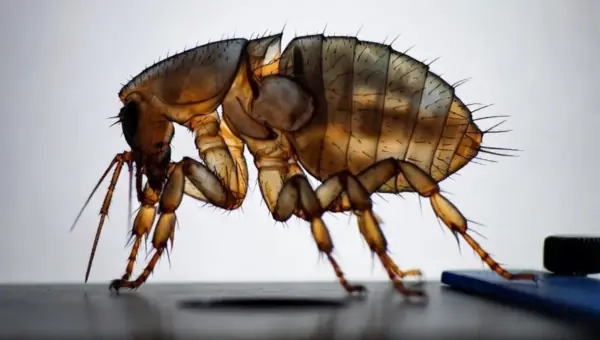
The flea life cycle includes several stages:

  • Eggs
  • Larvae
  • Pupae
  • Adult fleas

Some stages can remain within the surrounding environment rather than directly on the animal.

Carpets, floor edges, cracks and other protected areas can provide suitable environments for developing fleas.

Why Can Fleas Appear After a Property Becomes Vacant?

Flea pupae can remain protected within their cocoons while waiting for environmental signals associated with a potential host.

Factors such as movement, warmth and carbon dioxide can contribute to adult fleas emerging.

This is one reason flea activity may sometimes become noticeable after occupants or pets have left a property.

Why Treat the Property at the End of a Tenancy?

Fleas reproduce quickly under suitable conditions, and an established infestation can be difficult to manage.

A professional treatment is intended to control flea activity within appropriate areas of the property and help interrupt the flea life cycle.

This can help reduce the likelihood of an existing flea problem affecting incoming occupants.

Fleas Can Affect People and Pets

Flea infestations are more than an inconvenience.

Flea bites can cause:

  • Itching and irritation
  • Skin reactions in sensitive individuals
  • Discomfort for pets
  • Persistent scratching
  • Stress and frustration for occupants

If flea activity is present, dealing with it properly is important for both the property and its occupants.

What Should Tenants Do Before Moving Out?

If you've had a pet at the property, check your tenancy agreement before booking your end-of-lease services.

You may also want to ask your property manager:

  • Whether flea treatment is required under your agreement
  • Whether a professional pest-control company must perform the treatment
  • When the treatment should be completed
  • Whether an invoice or treatment record needs to be supplied
  • Whether there are any specific requirements for the service

Confirming these details beforehand can prevent confusion during the vacate process.

What About DIY Flea Treatments?

Supermarket sprays and flea bombs are available, but they aren't necessarily equivalent to a professional pest-control service.

DIY treatment may also be unsuitable where the tenancy agreement or property manager specifically requires evidence of professional treatment.

Professional pest-control technicians can assess the property, select an appropriate treatment method and provide documentation for the service performed.

If your lease requires professional treatment, confirm what documentation your property manager expects.

Professional End-of-Lease Flea Treatment in Perth

Clean Carpets and Pest Control Perth provides professional flea treatments for tenants preparing to vacate rental properties.

We can provide documentation confirming that the treatment has been completed, which can then be supplied to your property manager or real estate agency where required.

Moving Out With a Pet?

Check your tenancy agreement or speak with your property manager to confirm whether an end-of-lease flea treatment is required.

If you need professional treatment, contact Clean Carpets and Pest Control Perth to arrange your end-of-lease flea service.

Why Ants invade your home - and how to stop them

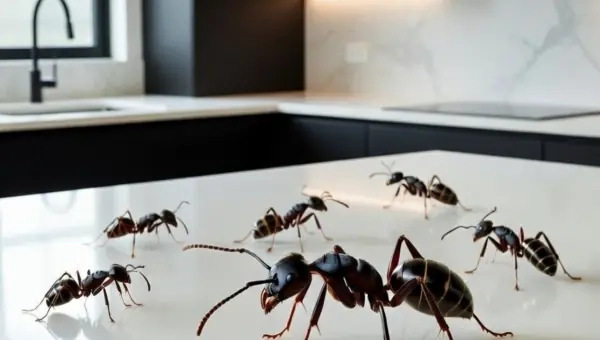
Ants are highly organised social insects that live in colonies and can quickly take advantage of food, water and shelter around our homes.

A clean home isn't necessarily an ant-free home. Even small crumbs, spills, pet food or moisture can attract foraging ants. Once a scout finds a suitable resource, it can recruit other members of the colony, which is why a single ant can seemingly turn into a trail across your kitchen.

Understanding what attracts ants and how they enter your home is the first step towards controlling the problem.

How Do Ants Find Food?

Ants have highly developed sensory systems that help them locate food, water and suitable shelter.

When a scout ant discovers a food source, it can lay down a chemical pheromone trail. Other ants follow this trail towards the resource and can reinforce it as they travel.

That's why a small spill or a few crumbs can sometimes result in a surprisingly organised trail of ants.

Why Do Ants Come Indoors?

Ants generally enter homes in search of three basic resources:

  • Food
  • Water
  • Shelter

Environmental conditions can also influence ant activity. Changes in temperature, rainfall and available resources outdoors may encourage colonies to forage around buildings and indoor areas.

What Attracts Ants to Your Home?

Different ant species have different feeding preferences, but several common household resources can attract them.

Sugars and Sweet Foods

Sugary foods provide an easily accessible energy source for many ant species.

Potential attractants include:

  • Juice and soft drink spills
  • Jam
  • Honey
  • Syrup
  • Melted ice cream
  • Fruit and other sweet foods

Even a small amount left on a bench or floor may be enough for foraging ants to discover.

Proteins and Fats

Some ant species or colonies may seek protein and fatty foods, particularly depending on their nutritional requirements.

Common sources include:

  • Meat scraps
  • Grease and cooking residue
  • Cheese
  • Pet food
  • Food waste

Pantry Foods

Food stored in or around the pantry can also provide a reliable source for ants.

This may include:

  • Cereal
  • Rice
  • Pasta
  • Breadcrumbs
  • Open food packaging
  • Pet food

Keeping pantry products properly sealed can make these areas less attractive.

Water and Moisture

Ants also need access to water.

Moisture may be available around:

  • Leaking taps
  • Sinks
  • Showers
  • Condensation
  • Damp areas
  • Pet water bowls
  • Plumbing leaks

Fixing persistent moisture problems can therefore form an important part of ant prevention.

How Do Ants Get Inside?

Ants can exploit very small gaps and openings around a building.

Common entry points include:

  • Cracks and gaps
  • Spaces around windows and doors
  • Openings around pipes and utility lines
  • Damaged screens
  • Worn weather stripping
  • Other gaps around the building exterior

Vegetation and objects touching the house can also provide convenient pathways.

Tree branches, shrubs and other plants close to the structure may allow ants easier access to exterior walls, roofing and potential entry points.

Common Ant Hotspots Around the Home

Ants will explore areas that provide suitable food, moisture or shelter.

Kitchen

Kitchens are one of the most common areas for ant activity because they provide numerous potential food and water sources.

Look around:

  • Benchtops
  • Pantries
  • Bins
  • Under appliances
  • Pet feeding areas
  • Sinks

Bathroom

Bathrooms can provide reliable moisture through sinks, showers, condensation and plumbing.

Bedroom and Living Areas

Food and drinks carried into bedrooms or living areas can create additional feeding opportunities.

Houseplants can also sometimes be associated with ant activity, particularly when other insects on the plants produce honeydew that ants feed on.

Laundry

Laundry areas may provide moisture, plumbing and stored pet food, making them another potential hotspot.

How to Make Your Home Less Attractive to Ants

Prevention focuses on reducing access to food, water, shelter and entry points.

Control Food Sources

  • Store food in sealed containers
  • Clean spills and crumbs promptly
  • Avoid leaving dirty dishes out for extended periods
  • Keep rubbish bins properly closed
  • Clean underneath and behind appliances
  • Store pet food securely

Manage Moisture

  • Repair leaking taps and plumbing
  • Wipe up standing water
  • Improve ventilation in persistently damp areas
  • Investigate unexplained moisture or leaks

Reduce Entry Points

  • Seal appropriate cracks and gaps
  • Repair damaged screens
  • Check seals around doors and windows
  • Trim vegetation away from the building
  • Avoid storing materials directly against exterior walls where possible

What About Ant Trails?

Cleaning surfaces can help remove food residue and disrupt some of the pheromone trails ants use to navigate.

However, repeatedly wiping away visible ants doesn't necessarily eliminate the colony responsible for the activity.

If ants continue returning to the same area, there may be an established nest or reliable food and water source nearby.

When Should You Call a Professional?

Some ant problems can persist despite good cleaning and prevention.

Correct identification can be important because different ant species may behave differently and require different control strategies.

A professional pest-control technician can:

  • Assess the extent of ant activity
  • Help identify the ant involved
  • Look for likely nesting and foraging areas
  • Select an appropriate treatment method
  • Recommend practical prevention measures

Don't Just Treat the Ants You Can See

The ants travelling across your kitchen bench may represent only a small part of a much larger colony.

Reducing food and moisture sources, limiting entry points and addressing the source of persistent activity can provide a more effective approach than simply dealing with individual ants as they appear.

Less food. Less moisture. Fewer opportunities for ants.

Need Help With an Ant Problem?

Clean Carpets and Pest Control Perth provides professional ant-control services throughout the Perth area.

If ants keep returning despite your efforts, contact our team to arrange an assessment and appropriate pest-control treatment.

© Clean Carpets and Pest Control Perth.
  • Home
  • Pest Control
    • Pest Control Perth
    • Commercial Pest Control
    • White Ants/ Termites
    • Pet/Flea Treatment
    • Bee Relocation
    • Millipedes
    • Cockroaches
    • Ant Control Perth
    • Rats & Mice Control Perth
  • Pest Guide
  • Cleaning Services
    • Carpet Cleaning
    • Tile and Grout Cleaning
    • Mattress Sanitization
    • Rug Cleaning
    • Upholstery Cleaning
  • Specialized Cleaning Services
    • Pet Treatment
    • Advanced Stain Removal
    • Odour Removal
    • Mould Treatment
    • Flood Restoration
    • Urine Treatment
  • About
    • T's & C's
  • Get a Quote
  • Our Blog
  • 0455 851 072
  • admin@carpetsandpests.com.au